Modular Diagnostics Platform
Every measurement next-gen MCF devices and future FPPs need: one industrial system, one reliable supply chain.

What it is
Research-grade diagnostics do not transfer to commercial fusion: they lack standardization, have no industrial supply chain, are not built for 24/7 operation, and are not ready for FPP neutron fluxes, magnetic fields, and temperatures. The Modular Diagnostics Platform (MDP) brings into one industrial system every measurement a next-gen MCF device or future FPP needs for physics validation, plasma control, device safety, and the licensing case. Co-designed with the device: minimized footprint, lower CAPEX and OPEX, lifecycle support, FPP-grade maintenance.
What you get
- Redundancy by design, with physics-informed neural networks restoring what sensors miss
- Minimized footprint: ports and in- and ex-vessel hardware co-designed with your device
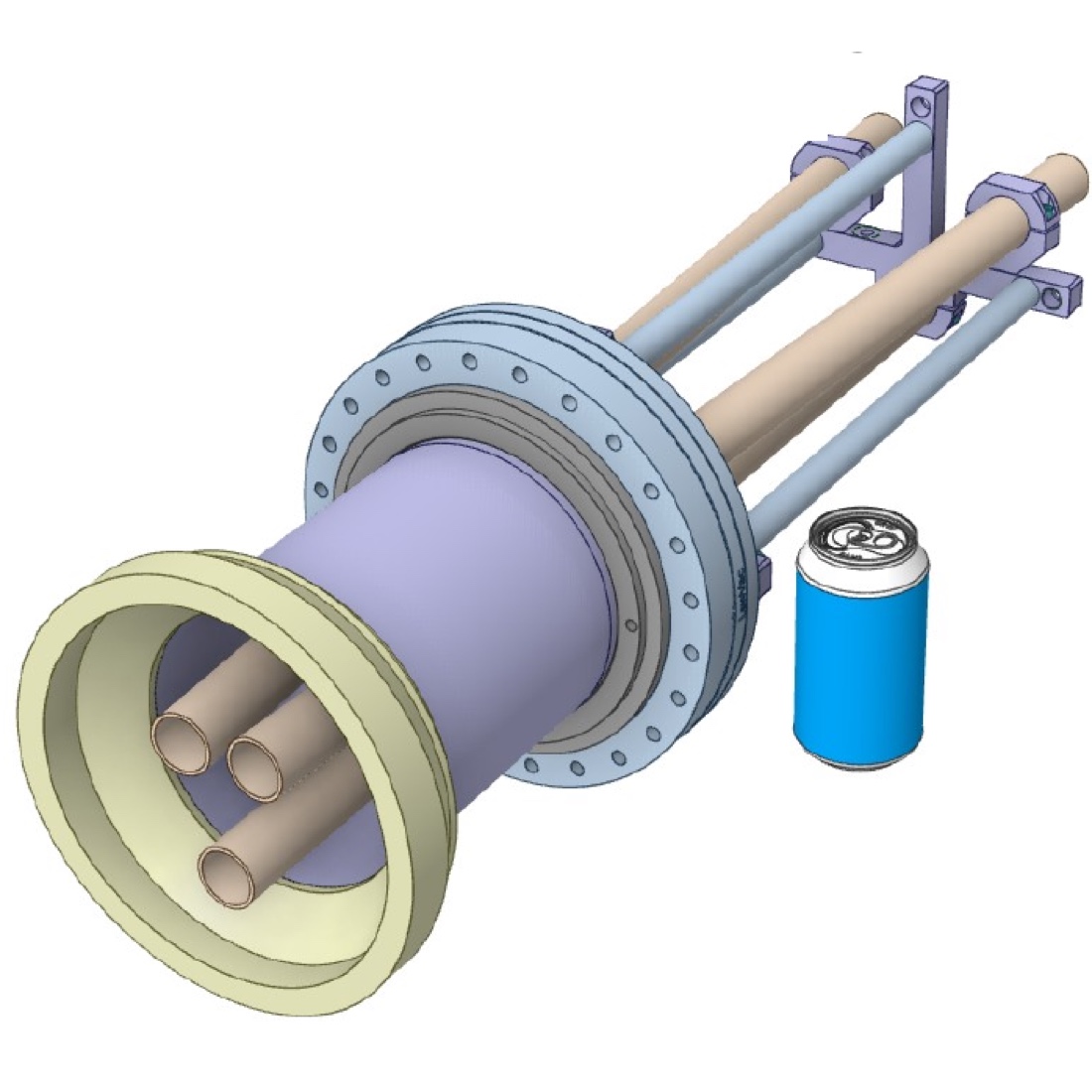
- Hot-swappable port-plug units with neutron and gamma shielding, thermal management, and vacuum boundaries
- Versatile Integrated Data Acquisition (VIDA): real‑time data with uncertainties for control and safety
- Purpose-built supply chain; factory acceptance testing, commissioning, calibration, lifetime support
How it works
We start from the measurements your device needs and co-design diagnostics, control, and safety with the machine from day one, avoiding later retrofits. Next-gen devices are pilot and demonstration plants, so physics validation matters as much as control. We work across diagnostic types and study each option thoroughly for the best solution for every kind of MCF device.
Proof
The MDP demonstrator is in active development (Fig. 1). Testing units of THOR, our graphene-based Hall sensor for magnetic diagnostics, are in assembly. The concept was presented in 2026 at the ITER Public-Private Fusion Workshop and the EPS and High Temperature Plasma Diagnostics conferences. Confinement-state classification with a profile reflectometer and ensemble diagnostics for FPPs is published in Nuclear Fusion with UC San Diego and UCLA. Our growing diagnostics team, led by Antoine Sirinelli with 20+ years at JET and ITER, is complemented by our integrated modeling and plasma control teams.